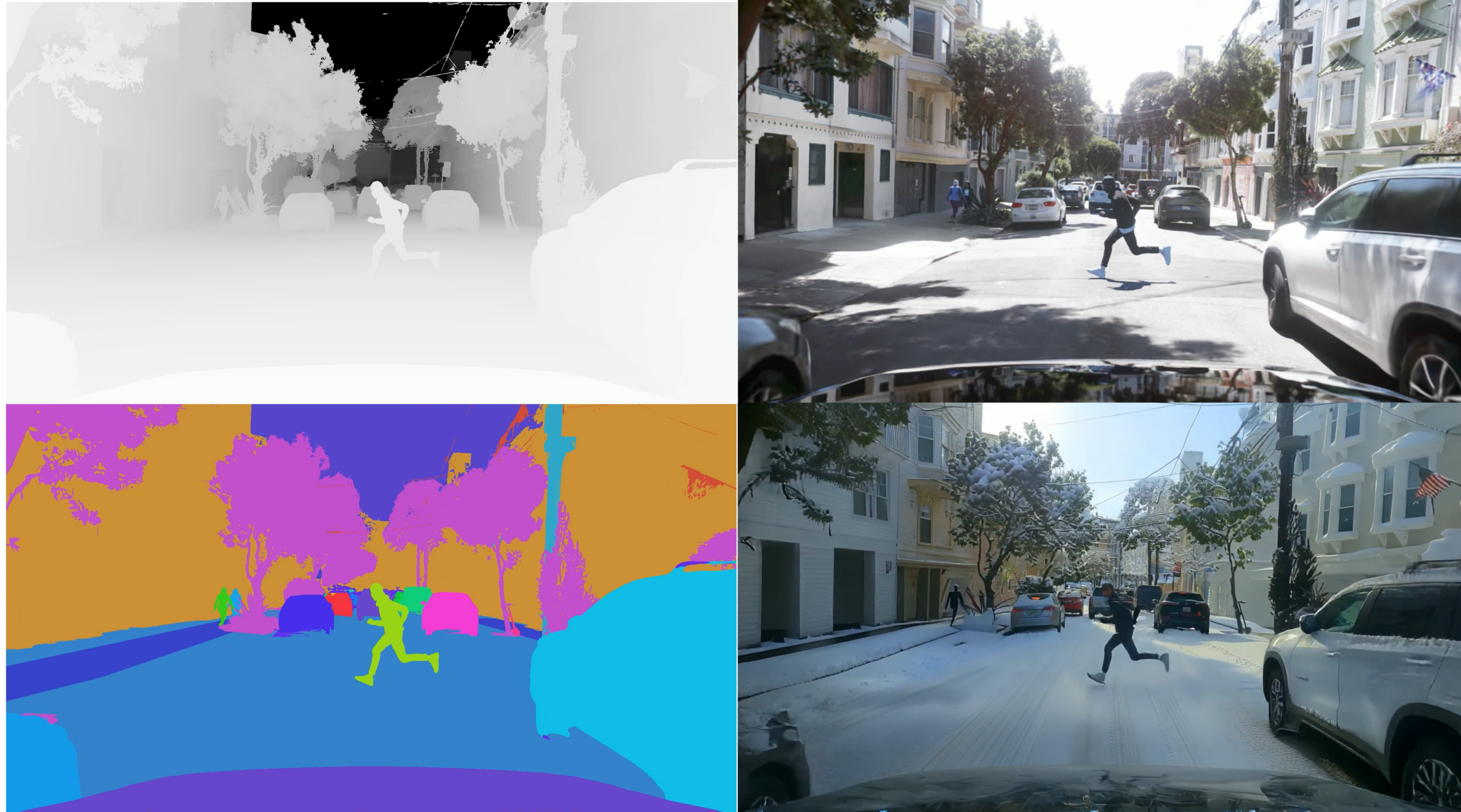
From Sparse Data to Photorealism: Accelerating Physical AI with Parallel Domain and NVIDIA Fixer
In the development of Physical AI, the ability to trust your simulation is everything. At Parallel Domain, we reconstruct reality from sensor data, powering photorealistic simulation to test and verify end-to-end model and perception performance.
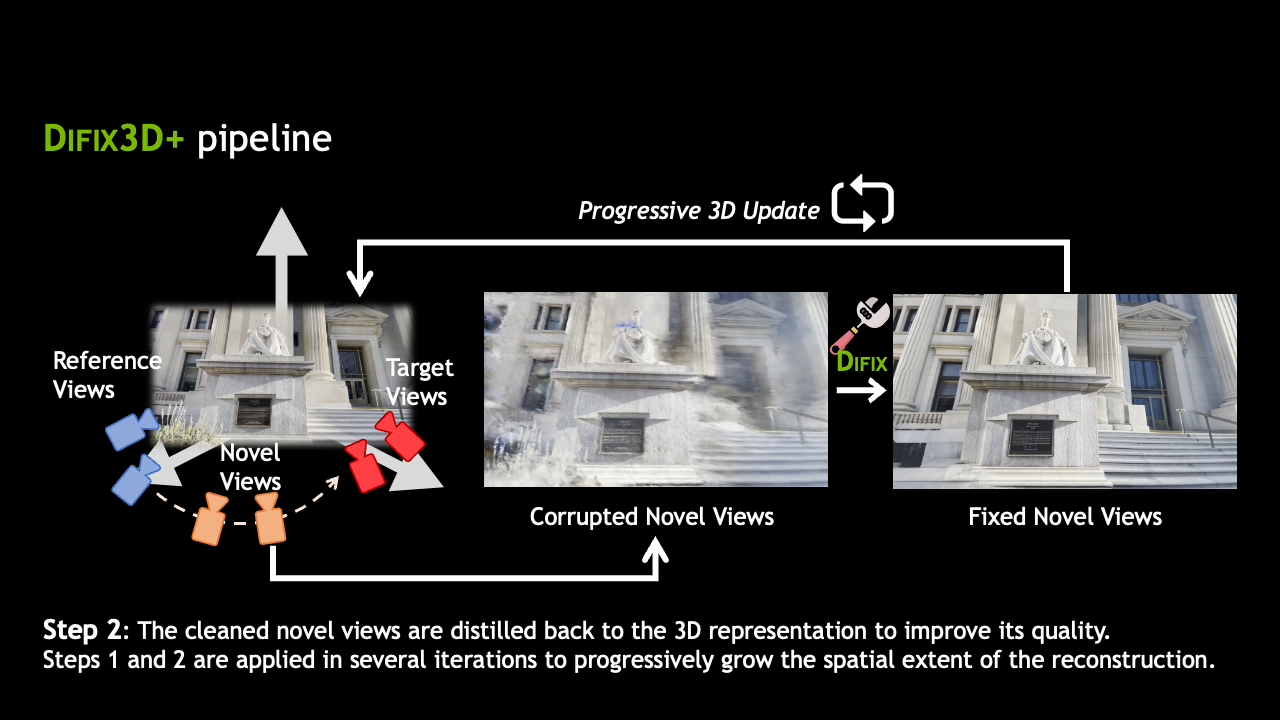
To verify autonomous systems effectively, we need environments that are more than just visual approximations, they must be geometrically accurate and capable of withstanding rigorous testing. That is why we are excited to unveil our latest technical advancement at CES: the integration of NVIDIA Omniverse NuRec Fixer into our PD Replica pipeline.
The Challenge: The Gaps in Reality
Building a digital twin from real-world data is complex. Sensors have limitations, occlusions occur, and capturing every angle of a dynamic environment is often impossible. Traditional reconstruction methods can struggle with these gaps, leading to visual artifacts or inaccurate geometry when rendering views that weren’t explicitly captured by the original sensors. When a simulation platform relies on messy input data, it limits the developer’s ability to test rigorously.
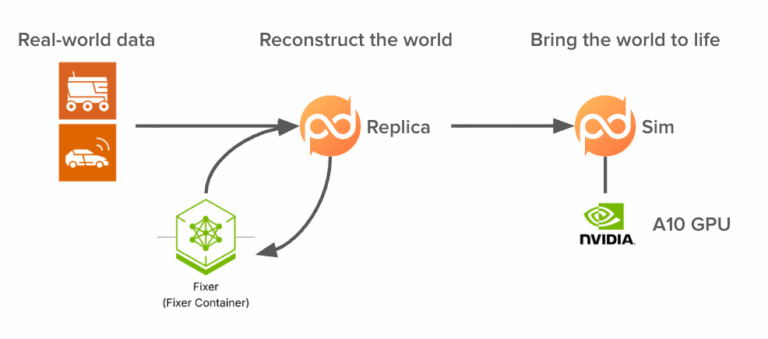
The Solution: Closing the Gaps With NVIDIA Omniverse NuRec Fixer
NVIDIA Omniverse NuRec Fixer is a diffusion-based model built on the NVIDIA Cosmos Predict world foundation model that removes rendering artifacts and restores detail in under-constrained regions of a scene. By incorporating Fixer into the PD Replica creation workflow, running on NVIDIA GPUs, we are transforming how messy real-world data is converted into simulation-ready assets.
The results we are seeing in our internal testing are transformative. By utilizing Fixer, our pipeline can now:
- Master Novel Poses: One of the hardest challenges in simulation is rendering “off-axis” views, angles the original capture never saw. Fixer excels here, allowing us to balance real vs. virtual viewpoints and generate valid data for large off-axis views.
- Clean Up Artifacts: Where base reconstruction sometimes leaves noise, Fixer acts as an intelligent post-processor. It significantly reduces artifacts and mitigates shifts in color space, resulting in a cleaner, more consistent image.
Visual Proof
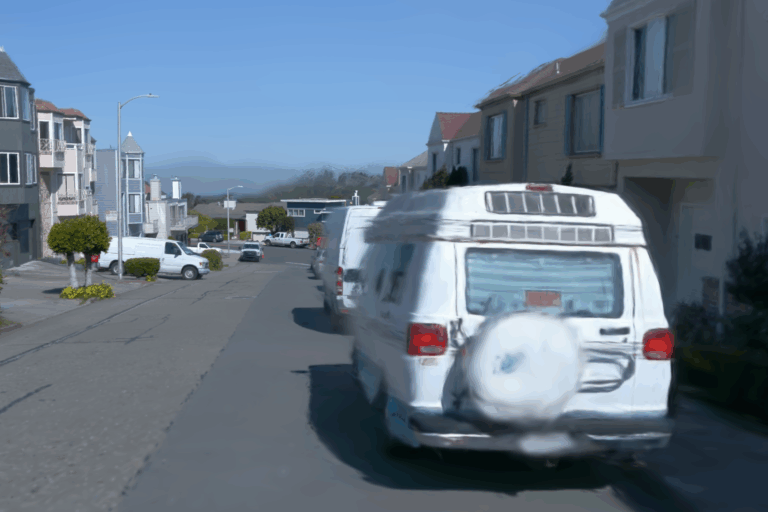
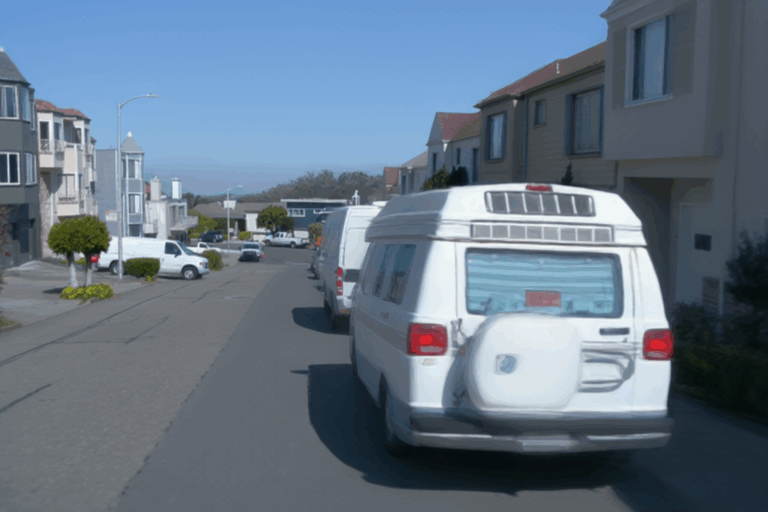
In early comparisons, the difference is stark. While the Base Replica provides a solid foundation, the Replica + Fixer output sharpens dynamic objects and smooths out noise, creating a scene that is simulation-ready. This improvement in geometric accuracy allows perception teams to trust that an obstacle in the simulation will trigger the same response as it would in the physical world.
Powering Software Augmented Testing
This integration reinforces our commitment to Software Augmented Testing. By combining the high-fidelity reconstruction of PD Replica with the neural rendering capabilities of Fixer, we enable developers to:
- Test the Untestable: Generate scenarios that are too dangerous or rare to hunt for on the road.
- Verify Perception Performance: Use pixel-perfect ground truth to run regression tests on perception stacks with confidence.
- Scale Without Overhead: Achieve these high-fidelity results without the massive data requirements of purely generative AI approaches.
Collaborating to Drive Innovation
We’ve been working closely with NVIDIA to push our tech forward. By leveraging NVIDIA AI infrastructure and the Fixer architecture, we are helping simulation power physical AI development more broadly. Together, we are turning sparse, noisy real-world data into the pristine, annotated environments required to deploy safe autonomous systems.
Visit us at CES to see how Parallel Domain is defining the future of sensor simulation and physical AI development with NVIDIA technology.