Robotics
Warehouse floors are too chaotic to test autonomous systems
Shifting inventory, varied lighting, congested aisles, and human co-workers create a challenging environment for physical AI to operate. Empower your team with deterministic sensor simulation and real-fidelity digital twins to deploy faster and safer.
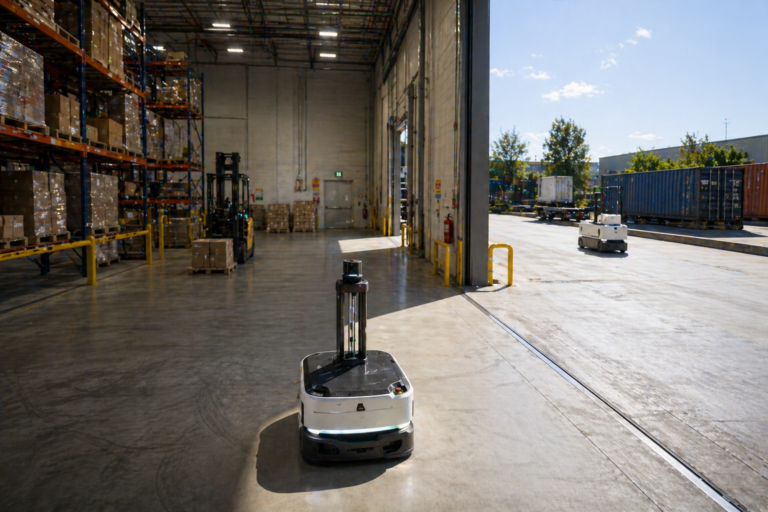
Software augmented testing for robotic autonomy.
Real-fidelity digital twins and deterministic sensor simulation to build, test, and validate perception systems for autonomous material handling in environments that mirror the chaos of real operations.
Challenges with Warehouse Perception Development
Safe, Reliable Perception
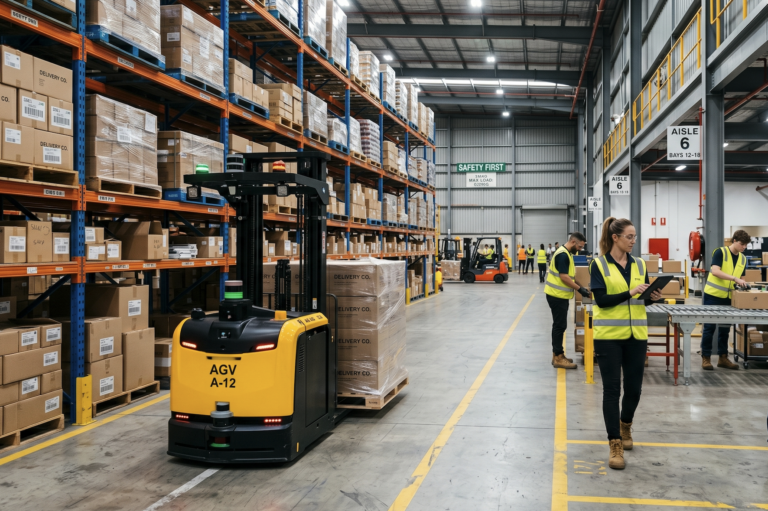
Edge Cases — Fallen pallets, unexpected workers, reflective surfaces, and transparent packaging create perception challenges rarely seen in controlled tests.
Observability — Model changes can introduce regressions in narrow-aisle navigation or pick accuracy.
Safety — Collisions with workers, racking, or inventory cause injuries and operational downtime.
Solution — Continuously evaluate perception against standard and edge-case warehouse scenarios in a simulation that mirrors real facility complexity.
Time and Cost
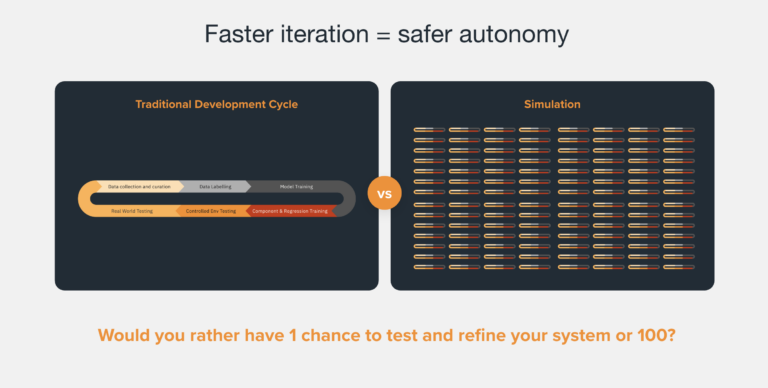
Capturing data in active warehouses disrupts operations and throughput.
Warehouse layouts change frequently and data becomes stale fast.
Labeling pallets, conveyors, shelving, and workers across sensor modalities is labor-intensive.
Solution — Generate the scenarios, test suites, and datasets you need in days, without disrupting operations.
Scalability Across Facilities and Equipment
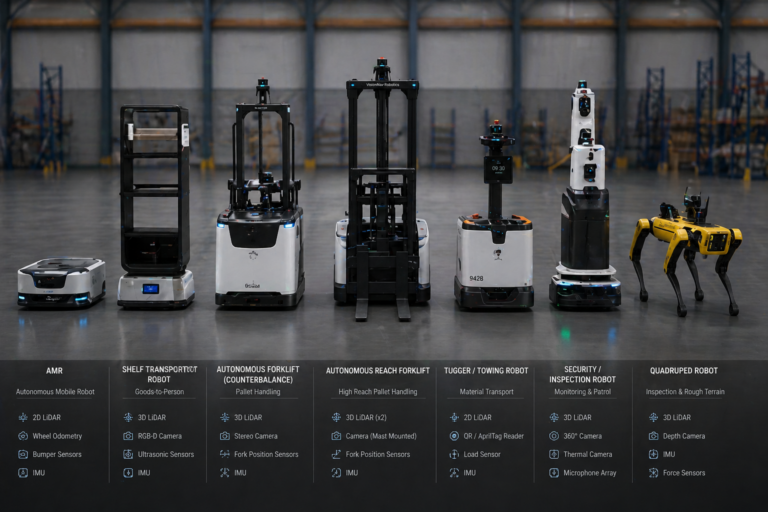
Different warehouse layouts, racking systems, and inventory types require separate data campaigns.
New facilities mean new floor plans, lighting conditions, and workflow patterns.
Different robotics platforms carry different sensor suites.
Solution — Simulate new inventory configurations, and robot platforms by updating code, not recapturing data.
PD Replica + PD Sim for warehouse robotics and material handling autonomy.
Evaluate
Analyze
Train
Addressing Industry Challenges
Test without disrupting operations
Scale across facilities and robot fleets
Protect workers in shared spaces
Schedule a Demo
See how Parallel Domain can accelerate your warehouse autonomy development. Fill out the form and our team will be in touch.